
Full Name: FDF Stress Testing Regenerative Agricultural Practices (STRAP) (Drought resilience in novel emerging dryland farming practices – A scientific and economic basis)
Funding Body: Future Drought Fund (FDF)
Duration: 2025 – 2030
Project Lead: CSIRO
Background: The STRAP Project aims to rigorously study regenerative cropping and pasture management to boost drought resilience in dryland farming systems in southern Australia.
The project is the first comprehensive, region-wide evaluation of regenerative agriculture across southern Australia’s grain-growing regions. As seasonal conditions become more variable and drought events more frequent, there is increasing interest in farming systems that improve resilience while maintaining productivity and profitability.
Rather than promoting a single farming approach, the STRAP project is designed to provide an independent scientific assessment of regenerative practices, helping growers better understand where these systems may offer benefits under different farming environments.
What is regenerative agriculture?
Regenerative agriculture generally focuses on improving soil function and building more resilient farming systems. Five commonly recognised principles include:
• Minimising soil disturbance through reduced tillage
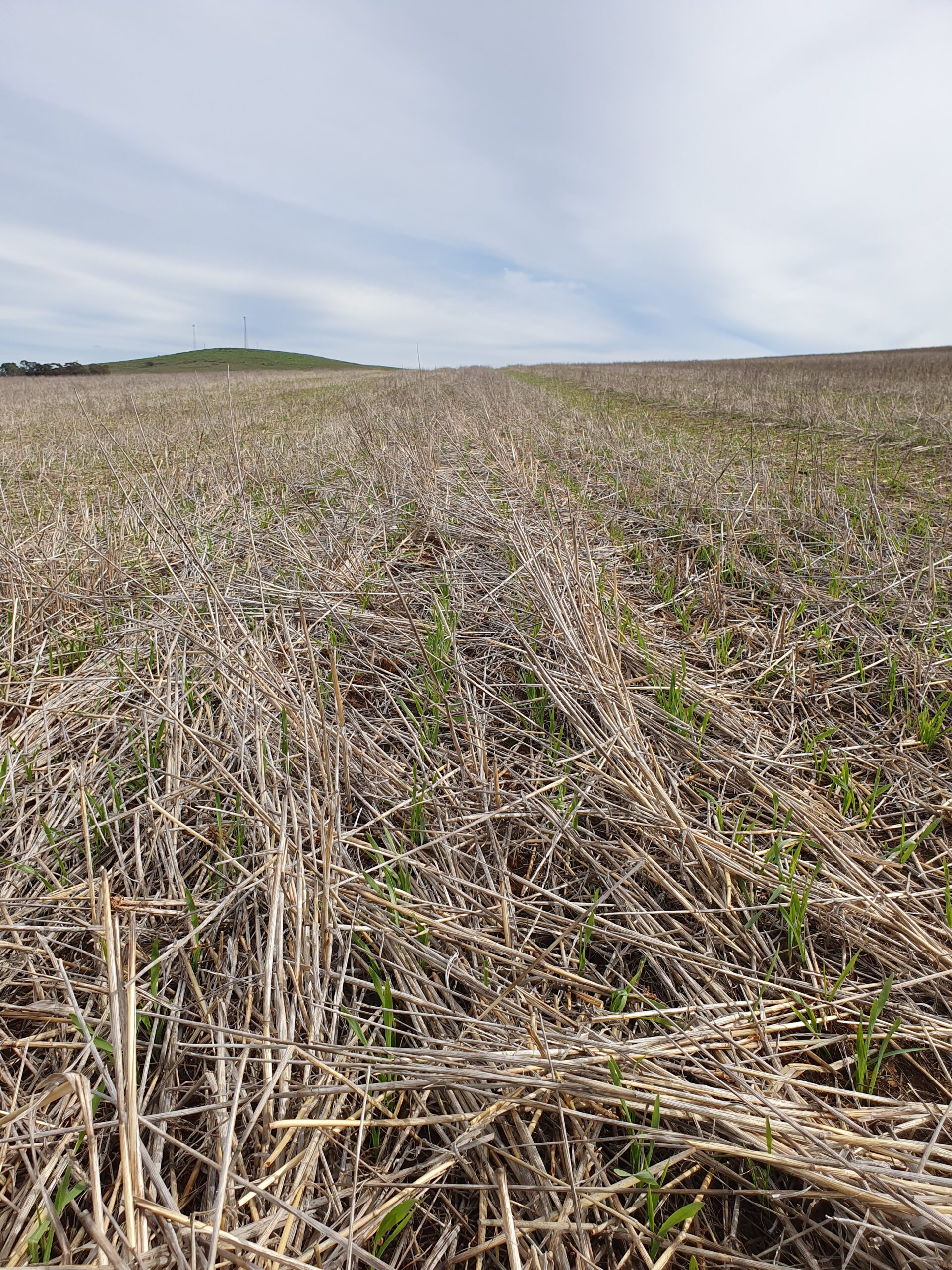
• Keeping the soil surface covered with crop residues or mulch
• Maintaining living roots in the soil wherever practical
• Increasing crop diversity through rotations or intercropping
• Integrating livestock into the farming system where appropriate
The project will evaluate how these principles influence soil health, drought resilience and farm productivity over the long term.
UNFS is hosting two large-scale paddock demonstrations under commercial farming conditions. The first UNFS demonstration located near Jamestown compares current district practice with two regenerative approaches incorporating organic carbon, micronutrients and biostimulants, reduced synthetic nitrogen at seeding and adaptive in-season nitrogen, with or without phosphorus at seeding. The treatments will be maintained across a four-year cropping rotation of wheat, barley and lentils, allowing changes in soil health, crop performance and system resilience to be monitored over time.
A second UNFS demonstration near Booleroo Centre will investigate the incorporation of permanent perennial grass into a cropping system.
Together, these sites will generate locally relevant information to help Upper North growers assess the opportunities and practical implications of regenerative farming practices.
Maintaining the treatments in the same location each year will allow researchers to monitor gradual changes in soil health, crop performance and system resilience over time. The STRAP project aims to generate valuable local information on how some regenerative agriculture farming systems perform under Upper North conditions. Along with the local demonstration sites, the project includes five long-term research trials and four large-scale demonstration sites across southern Australia.
Contact: Rachel Trengove, UNFS Program Manager